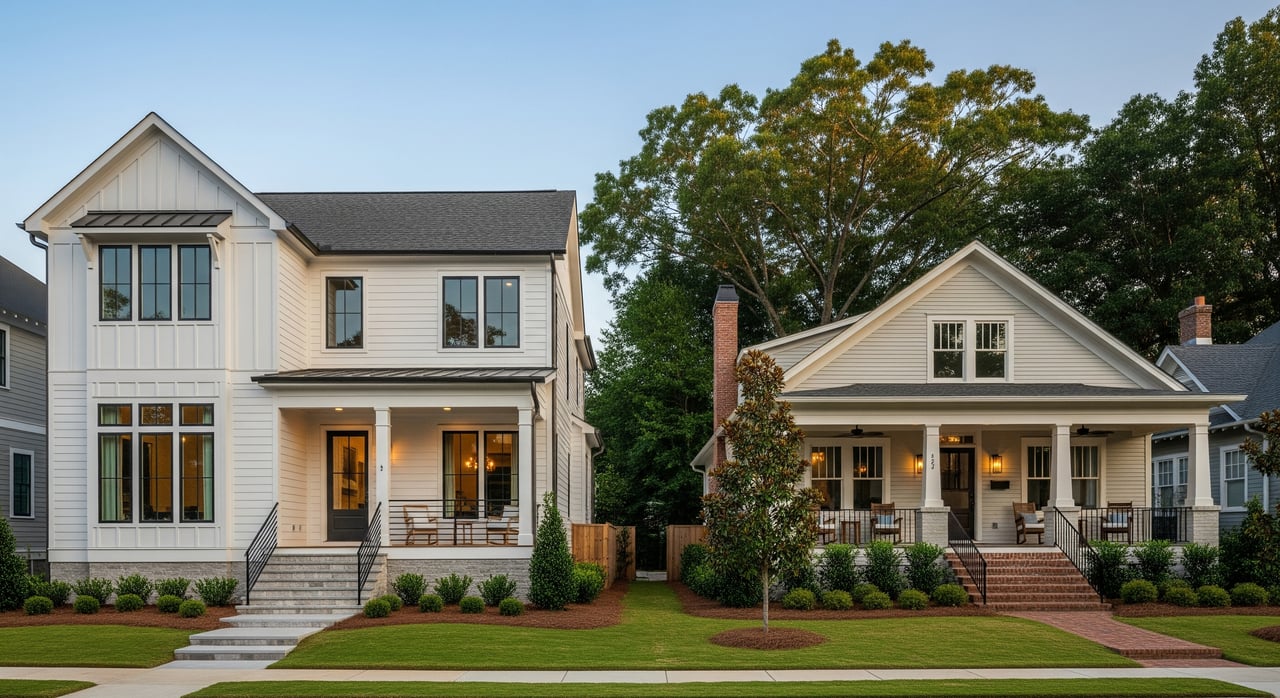
Trying to decide between a brand-new build and an established resale in Fuquay-Varina? You are not alone. With steady growth around the Triangle, both options can be smart depending on your budget, timing, and priorities. In this guide, you will compare costs, timelines, inspections, warranties, neighborhood factors, and more so you can choose with confidence. Let’s dive in.
Cost: upfront and “all-in”
When you price new construction, look beyond the base price. You will also weigh lot premiums, design packages, and options like flooring, lighting, and appliances. Some items that feel “standard” may not be included, such as window coverings, landscaping, fencing, gutters, or driveway extensions. Builder incentives can help, but they may be tied to preferred lenders, timing, or specific homes.
With a resale, the list price is usually closer to all-in. You can negotiate repairs, credits, or closing costs. You may also plan for immediate upgrades like roof, HVAC, or cosmetic updates. The best approach is to compare the total move-in cost for resale to the true out-the-door price for new construction.
Upfront cost checklist
- Ask builders for an itemized base price, lot premium, and a full options list.
- Confirm what is and is not included in the advertised price.
- Price window treatments, fencing, garage openers, and landscaping.
- For resales, estimate near-term repairs and cosmetic updates and factor them into your offer.
Long-term costs to plan for
Property taxes in Fuquay-Varina are assessed by Wake County. New construction taxes can adjust in the year after closing when the home is fully assessed. Ask for a tax estimate for the specific lot and confirm the current municipal rate. Build your budget around the first full year after completion.
Many newer communities include HOA fees for amenities and maintenance. Early-phase communities may later add special assessments to complete infrastructure. Resale neighborhoods often have more stable budgets you can review. Read HOA documents, fee schedules, and reserve studies before you commit.
New homes often deliver lower near-term maintenance and stronger energy performance. Larger square footage or younger landscaping can still affect utilities and yard care costs. Resales can carry older systems that will need replacing on a different timeline.
Financing and appraisals
Spec homes or finished new construction typically qualify for standard mortgages. If you build from a plan, you may need a construction-to-permanent loan with draws tied to build stages. Review terms carefully, including rate locks and draw schedules.
Appraisals sometimes lag fast-changing new-home pricing. If the appraisal comes in low, you may need a larger down payment, different comps, or a revised contract. Builders often offer incentives through preferred lenders. Compare total cost of funds and lock terms across lenders. VA and FHA loans can work for new construction but may require additional documents or inspections.
Timeline and certainty
New builds can be variable. Permits, supply chains, weather, and builder schedules all influence completion. Your contract should include an estimated completion date and remedies for delay. If you are selling a current home, plan for bridge financing, leaseback, or temporary housing.
Resales generally close faster and with more predictable dates. Once you finish inspections and secure financing, closing timelines are usually firm. This can be a strong fit if you need to move on a set schedule.
Inspections and quality control
Builder walk-throughs do not replace an independent inspection. For new homes, schedule a third-party pre-drywall inspection and a final inspection before closing. A full post-closing inspection during the warranty window can help catch items early. Common new-home issues include punch-list items, grading or drainage, and minor settling cracks.
For resales, order a full home inspection that covers roof, structure, HVAC, plumbing, electrical, and pests. Add radon testing where applicable. Older systems and hidden moisture issues are common findings. Use results to negotiate repairs or credits.
Warranties and contracts
Most builders provide a 1-year workmanship warranty, 2-year systems coverage in some cases, and a 10-year structural warranty, often through a third party. Confirm coverage, exclusions, response times, and how claims are handled. Ask if warranties are transferable.
Resales do not include builder warranties. You will rely on seller disclosures, and you can purchase a one-year home warranty for peace of mind. Builder contracts differ from standard North Carolina purchase forms. Review change orders, liquidated damages, arbitration clauses, and financing contingencies with an experienced agent or real estate attorney.
Neighborhood and schools
Resale neighborhoods often offer mature trees, finished amenities, and known traffic patterns. New communities may be mid-build and still adding amenities. Future phases and nearby plans can change traffic and density over time. For any address, verify current Wake County Public School assignments and confirm commute times.
Resale value and appreciation
Long-term value often comes down to location, lot quality, floor plan, build quality, and neighborhood desirability. New homes can carry an initial premium. When many similar specs hit the market at once, supply can pressure short-term resale pricing in that submarket. Well-located older homes with strong lots can appreciate well over time.
Local risks to check in Fuquay-Varina
- Planned phases and nearby road projects that may change traffic or density.
- FEMA flood maps and Wake County GIS for floodplain and elevation.
- Town permits, approvals, and stormwater requirements for the community.
Buyer comparison checklist
- Itemized base price, lot premium, and all upgrades.
- Closing costs and any builder-required escrows.
- Estimated first full-year property taxes after completion.
- HOA dues, initiation fees, budgets, and planned amenities.
- Utility setup costs and likely yard maintenance needs.
- Near-term maintenance for roof, HVAC, and appliances.
- Warranty coverage and timelines for claims.
- Costs for window treatments, fencing, mailbox, and irrigation.
- Recent comps for the same subdivision and floor plan.
- School assignment and commute time at contract stage.
Seller checklist to compete with new builds
- Highlight mature landscaping, established streets, and immediate occupancy.
- Tackle obvious deferred maintenance and cosmetic refreshes.
- Consider targeted updates where local ROI is strong, like kitchen or bath refreshes.
- Price with an eye on nearby new-home options and include features buyers expect.
Next steps
You have options in Fuquay-Varina. If you value customization, warranty coverage, and lower near-term maintenance, new construction can be a fit. If you prefer mature neighborhoods, faster closing, and potential negotiation room, a resale can deliver strong value. The best choice is the one that aligns with your total cost, timeline, and lot and location priorities.
If you want a side-by-side look at real options, including builder negotiations, comps, and timing strategies, reach out to Chad Ross for a personalized consultation.
FAQs
Is new construction usually more expensive here?
- Often yes on a per-square-foot basis once you include lot premiums and upgrades, but compare the total new-home out-the-door price to a resale’s full move-in costs.
How long does a new build take in Fuquay-Varina?
- Timelines vary by builder, permits, suppliers, and weather; spec homes can be quick, while build-from-plan can take months with potential delays.
Can I negotiate with a builder on price or options?
- Yes. Builders may negotiate lot premiums, incentives, and some upgrade packages, especially on spec homes or at certain times of year.
Do I need an inspection on a brand-new house?
- Yes. Schedule independent pre-drywall and final inspections; builder walk-throughs do not replace third-party inspections.
What warranties do builders provide on new homes?
- Typical coverage is 1-year workmanship, 2-year systems in some cases, and a 10-year structural warranty; confirm exact terms and exclusions.
How do taxes work on new construction in Wake County?
- Your tax bill may increase the year after closing when the home is fully assessed; ask for an estimate based on the completed property.
What local checks should I do before I buy?
- Verify school assignments, review HOA documents, confirm floodplain status, and assess Town approvals, road plans, and future phases for the community.