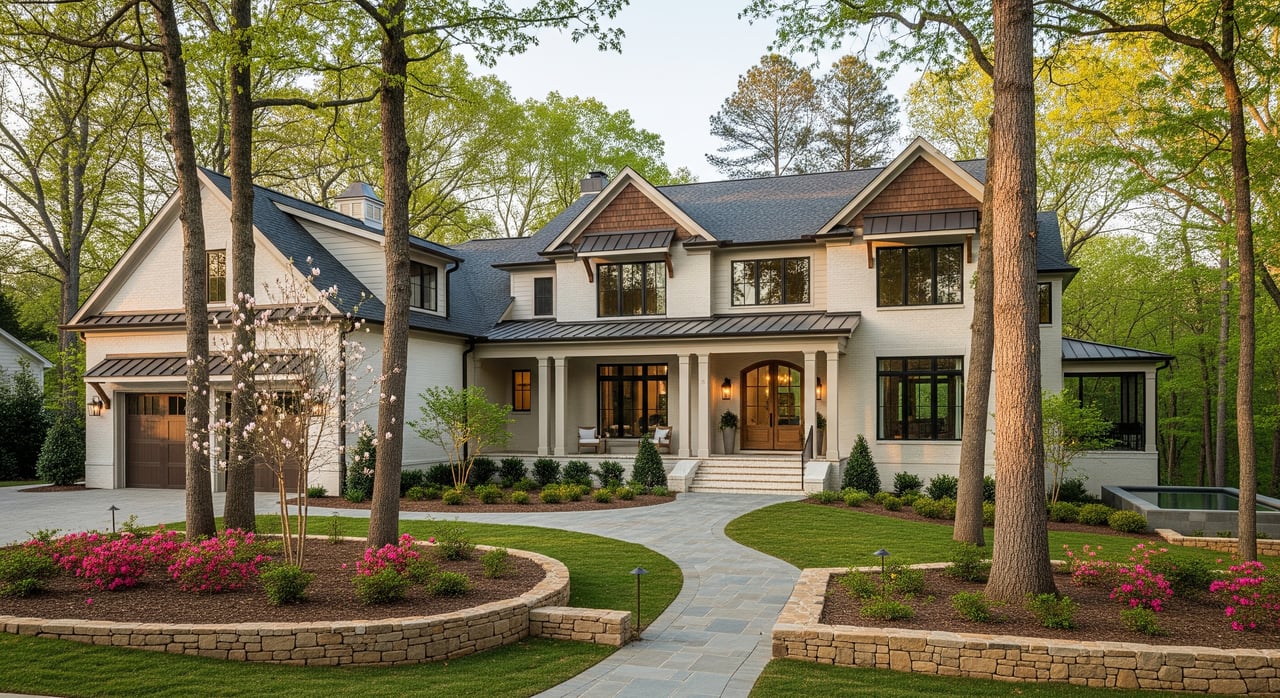
Thinking about a brand-new home in North Raleigh but not sure whether to buy from a builder or design your own? You are not alone. With steady job growth across the Triangle and limited lots in favorite neighborhoods, the options can feel exciting and overwhelming. This guide breaks down production new construction versus a fully custom build in Raleigh and Wake County, so you can match your timeline, budget, and wish list with confidence. Let’s dive in.
New construction in North Raleigh
Production new construction refers to homes built by local or national volume builders in planned communities or as move-in-ready spec homes. In North Raleigh, you will see these communities in the Falls of Neuse and Six Forks corridors, near Midtown/North Hills, and in nearby suburban pockets. Lots tend to be smaller in planned neighborhoods, with predictable covenants and amenities.
If you value a straightforward path to ownership, production homes offer a clear process with model homes, design centers, and often lender partnerships. Your choices are framed around set floor plans and curated finish packages.
Production pros
- Shorter, more predictable timelines, especially if you buy a completed or near-complete spec home.
- Often a fixed-price contract that reduces construction risk for you.
- Streamlined experience with in-house sales, design selections, and preferred lenders that may offer closing cost help or rate incentives.
- Neighborhood amenities and HOA standards that help maintain a consistent look and feel.
- Easier future appraisal and resale because there are more comparable homes nearby.
Production cons
- Less design flexibility and fewer structural changes once the plan is set.
- Lot selection is limited to what the developer releases, and premium lots carry added cost.
- Upgrades and change orders can get pricey, and some packages still feel standard.
- Fewer opportunities to tailor the home to a unique lot orientation or specialty features.
Custom build in North Raleigh
A true custom build starts with you: the lot, the architect, and a builder who can bring a one-of-a-kind plan to life. In North Raleigh, many desirable sites are wooded, on irregular terrain, or in areas that may include watershed buffers or tree protections. Securing the right lot and aligning your design with local rules is a key first step.
Custom projects can also include semi-custom, where a boutique builder modifies a base plan. This approach can strike a balance between personalization and budget control.
Custom pros
- Full control over layout, materials, and orientation that suits the site.
- Ability to integrate unique features like dedicated offices, flexible suites, or specialty kitchens.
- Potential for strong long-term value when a rare lot and thoughtful design align with market demand.
Custom cons
- Longer timelines due to design, permitting, and construction.
- Higher cost per square foot and added soft costs for architecture, engineering, and site work.
- More decisions and coordination, which can lead to decision fatigue.
- Site constraints, tree mitigation, and stormwater controls can add scope and cost.
Timelines and costs
- Inventory/spec production home: plan on about 30 to 60 days to close.
- Build-to-order production: typically 4 to 9 months from selections to completion.
- Custom build: commonly 9 to 18 months or more, depending on permitting and complexity.
- Budgeting: production homes follow a base price plus lot premium and upgrade packages. Custom builds include lot acquisition, design and engineering, site work, and higher per-square-foot construction costs. A 10 to 20 percent contingency is often recommended for custom projects.
Financing basics
With production builders, you usually close with a standard mortgage when the home is complete. Many builders offer incentives through preferred lenders, which can lower out-of-pocket costs. Always compare loan estimates so you know the true value of any incentives.
For custom homes, you will likely use a construction loan with funds released in draws as work progresses. Payments are often interest-only during construction. The lender will appraise the project based on plans and specs, then convert to permanent financing or require a separate mortgage when the home is finished.
Contracts and warranties
Production builder agreements typically include lot reservation terms, deposit schedules, estimated completion dates, options allowances, and dispute resolution clauses. Warranties often follow a structure common in the industry: one year for workmanship, limited multi-year coverage for major systems, and up to ten years for structural items. Read the coverage details and claims process closely.
Custom build contracts vary. Common models include fixed-price, design-build, cost-plus, or guaranteed maximum price. Each model balances budget certainty against flexibility. Confirm the scope, allowances, change-order process, draw schedules, retainage, completion standards, and how disputes are handled. Verify licensing and insurance for all contractors.
Inspection rights can differ by builder and contract. Ask about independent third-party inspections, walk-throughs, punch-list procedures, and energy testing.
Lots and local rules
Lot scarcity is often the biggest constraint in preferred North Raleigh neighborhoods. For custom builds, you may need to pay a premium for a special site or consider replacing an existing home to get the location you want.
City and County rules manage setbacks, lot coverage, stormwater, and tree protection. In northern Wake County, watershed rules around features like Falls Lake can limit impervious surfaces or require buffers. Before you commit, confirm utility access, sewer availability, tap and impact fees, and any HOA architectural requirements.
Which path fits you
Choose production new construction if you:
- Want a faster move-in with less coordination.
- Prefer fixed pricing and standard warranty protections.
- Are comfortable with a curated set of floor plans and finishes.
- Value neighborhood amenities and easier resale comps.
Choose a custom build if you:
- Need a site-specific design or highly individualized layout and finishes.
- Can accept a longer timeline and more decision-making.
- Are prepared for higher soft costs and a construction loan.
- Value long-term architectural quality and a rare lot.
Consider a semi-custom hybrid if you:
- Want meaningful plan changes without the full custom price tag.
- Prefer working with a boutique builder that offers flexibility and clearer cost control.
Practical checklist before you sign
- Verify builder licensing and insurance. Ask for recent references and warranty claims history.
- Confirm exact lot location, utility availability, and all tap or impact fees.
- Review deposit schedules and refund terms. Request independent inspection rights.
- Get a written list of allowances and upgrade pricing. Price specific finishes in writing.
- Clarify warranty terms and post-close claims procedures.
- For custom builds, order a site survey and soils or geotechnical report early. Get a preliminary civil estimate for grading and stormwater.
- Discuss financing early. Production incentives may require preferred lenders. Custom projects need a construction loan plan.
Resale outlook in Raleigh
Production communities create strong comparable sales, which support appraisals and future resale. Highly personalized upgrades in production homes may not fully translate into higher resale value, so focus on quality in kitchens, baths, systems, and energy performance.
Custom homes can command premiums when the lot is exceptional and the design aligns with neighborhood expectations. Lot quality is often the primary driver of long-term value. Avoid over-personalizing finishes that limit the future buyer pool.
Work with a local advisor
Choosing between production and custom is not just about budget. It is about timeline, lot availability, regulatory fit, financing, and how you want to live in the home. If you want a steady hand on lot sourcing, builder vetting, contract terms, and resale strategy, reach out to Chad Ross for a personalized consultation.
FAQs
How long does it take to move into a new Raleigh home?
- Inventory or spec homes can close in about 30 to 60 days, build-to-order production homes often take 4 to 9 months, and custom builds commonly run 9 to 18 months or longer depending on complexity.
What hidden costs should I expect with new construction in Wake County?
- Expect lot premiums, landscaping, window treatments, fences, decks, and rising property taxes after completion, and for custom builds include design, engineering, permits, and site work.
How do construction loans differ from standard mortgages in Raleigh?
- Construction loans fund draws during building with interest-only payments, use an appraisal of the completed plan, and then convert to a permanent loan or require a separate mortgage at completion.
What warranties come with a new builder home?
- Many builders provide one year of workmanship coverage, limited multi-year systems coverage, and up to ten years for structural items, with exact terms defined in the warranty documents.
Can I hire my own inspector for a builder home?
- Many contracts allow third-party inspections at defined stages or before closing, but permissions and timing vary, so confirm inspection rights in writing before you sign.
Is a semi-custom build a good middle ground?
- Semi-custom can offer plan flexibility and more control over finishes while keeping costs and timelines closer to production, which suits many buyers who want balance.